
Janwaron ko sudhana: kutte se kohan wali gaye tak
Subah ka doodh, dopahar ka gosht, sardiyon kiooni chadar, khet mein hal khainchta bail aur darwaze par pehra deta kutta. Hum bhool jate hain ke kabhi yeh sab janwar jungli the. Insan ne unhein apna saathi kaise banaya? Yeh…
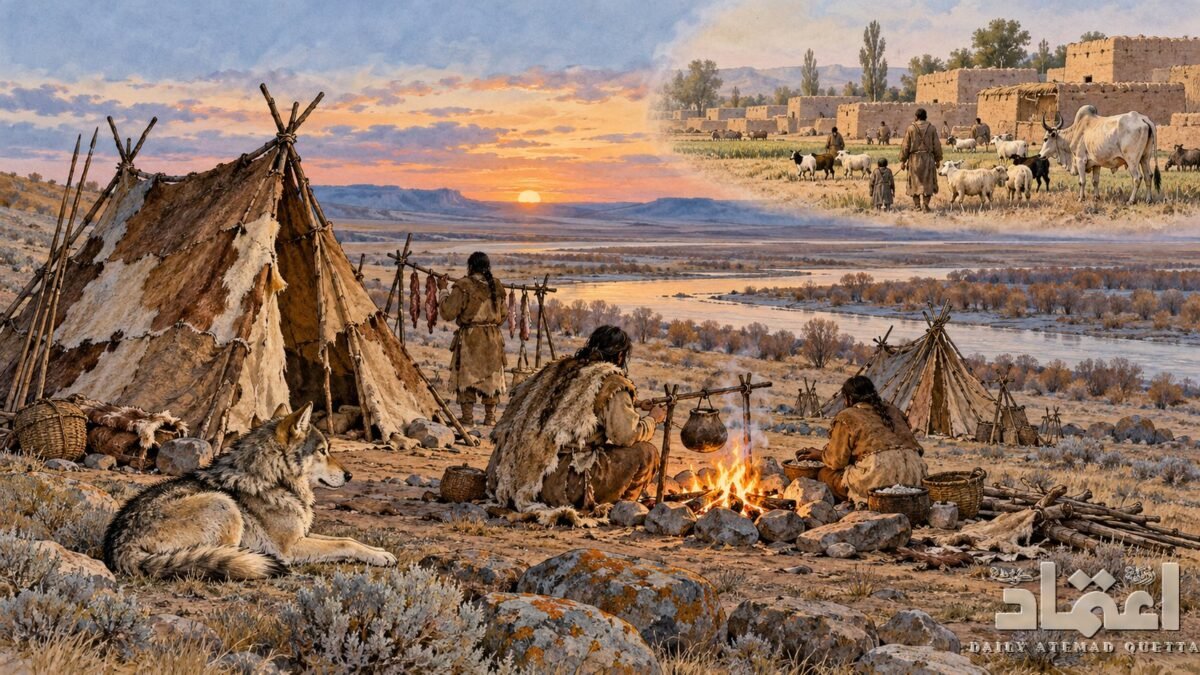
Subah ka doodh, dopahar ka gosht, sardiyon ki ooni chadar, khet mein hal khainchta bail aur darwaze par pehra deta kutta. Hum bhool jate hain ke kabhi yeh sab janwar jungli the. Insan ne unhein apna saathi kaise banaya? Yeh kahani barfani daur ke aakhri hisse se shuru hoti hai, aur is ka ek aham baab Balochistan mein likha gaya.
Sudhana kya hai?
Kisi jungli janwar ko paltu banana sirf use pakar kar bandh lena nahin, balke nasl dar nasl chalne wala amal hai jis mein afzaish insan ke qabu mein aa jati hai. Waqt ke saath in janwaron ki jismani sakht, mizaj aur hatta ke un ka DNA bhi apne jungli aaba se mukhtalif ho jata hai.
Amriki mahir-e-asar-e-qadeema Melinda Zeder (Melinda Zeder) ke mutabiq janwaron ko sudhane ka amal achanak nahin hua. Pehle shikar ke tareeqe badle, phir reworon ki dekh bhal shuru hui, aur jismani tabdiliyan is ke kai sau baras baad zahir huin.
Pehla saathi: kutta
Scientist muttafiq hain ke kutta insan ka pehla paltu janwar hai, aur yeh wahid janwar hai jo kheti bari shuru hone se pehle hi paltu ban chuka tha. Woh bheriye ki nasl se hai. Magar yeh kab aur kahan hua, is par abhi bahes jari hai.
Europe se milne wali kuch baqiyat 14 hazar baras ya is se bhi zyada purani hain jin mein kutte jaisi jismani sakht nazar aati hai. Germany ke maqam Bonn-Oberkassel (Bonn-Oberkassel) par taqriban 14,300 baras purana ek kutta do insanon ke saath dafan mila. Is ki haddiyon mein aisi bimari ke asar hain jo insanon ki taweel dekh bhal ke baghair jaan leva sabit hoti.
March 2026 mein Nature (Nature) mein do naye maqale shaya hue. Ek mein Turkiye ke maqam Pinarbasi (Pinarbasi) se milne wale taqriban 15,800 baras purane janwar ka DNA kutton se milta paya gaya, jabke Britain ke Gough's Cave (Gough's Cave) ka taqriban 14,300 baras purana namoona bhi kutta nikla. Doosre maqale mein Switzerland se 14,200 baras purane kutte ka DNA mila. In mutalon ke mutabiq is zamane tak kutte Europe aur Anatolia mein door door tak phail chuke the. Is se pehle kutte ka yaqeeni genetic saboot sirf taqriban 10,900 baras purana tha, is liye Pinarbasi ka namoona ab tak ka qadeem tareen maloom genetic saboot hai.
Kuch mahireen is se bhi pehle ki baat karte hain. 2021 ke ek mutale mein insanon aur kutton ki genetic tareekh ka muwazna kar ke yeh khayal pesh kiya gaya ke kutte ghaliban taqriban 23 hazar baras pehle Siberia mein sudhaye gaye, aur phir woh insanon ke saath America tak pahunche. 2020 ki ek aur tehqeeq ke mutabiq 11 hazar baras pehle tak kutton ki kam az kam paanch badi nasli shakhen alag ho chuki thin.
Bakri, bheD, gaye aur suwar
Kutte ke kai hazar baras baad zarkhez hilal (Fertile Crescent) mein, yaani maujooda Turkiye, Syria, Iraq aur Iran ke pahari ilaqon mein, charne wale janwaron ki baari aayi. Zeder ke 2008 ke jaize ke mutabiq bakri, bheD, gaye aur suwar, chaaron taqriban 11 hazar se 10 hazar baras pehle ke darmiyan insani nigrani mein aa gaye.
Iran ke pahari maqam Ganj Dareh (Ganj Dareh) par taqriban 9,900 baras purani haddiyon se pata chalta hai ke wahan ke log bakriyon ka baqayada rewar rakhte the: nar jawani mein zabah hote aur madayen der tak zinda rakhi jati thin. Junoob mashriqi Anatolia mein bheD aur suwar, aur darya-e-Furat ke baalai ilaqe mein gaye palne ke ibtidai asar mile hain. Genetic tehqeeq ne bhi tasdeeq ki hai ke paltu bheD aur bakri ke jungli aaba isi khitte ke hain.
Yeh janwar jald hi insanon ke saath safar karne lage. Zeder ke mutabiq saarhe das hazar baras pehle ke lag bhag log kashtiyon mein taqriban 60 kilometre samundar paar kar ke Cyprus pahunche aur chaaron janwar saath le gaye.
Mehrgarh aur kohan wali gaye
Balochistan ke Kachhi maidan mein waqe Mehrgarh (Mehrgarh) shimal maghribi junoobi Asia mein kashtkari ki sab se purani maloom basti hai. Wahan pehle hi daur se paltu janwar mojood the, jo zyada tar maghribi Asiai nauiyat ke the. Magar ek janwar khas taur par isi khitte ka tha: kohan wali gaye yaani zebu (zebu). Muhaqqiqeen ke mutabiq is ilaqe ki maqami jungli nasl ko basti basne ke kuch hi arse baad sudha liya gaya.
Mehrgarh ke pehle daur ki tareekh par mahireen muttafiq nahin. Khudai ke sarbarah Jean-Francois Jarrige (Jean-Francois Jarrige) ka khayal tha ke yeh daur taqriban 8000 qabl maseeh mein shuru hua. 2025 mein daanton ki nayi radio carbon tareekhon par mabni ek mutale ne is ka aaghaz taqriban 5200 se 4900 qabl maseeh ke darmiyan bataya hai.
Ghoda aur doodh
Har janwar itni jaldi nahin sudhaya gaya. 2021 mein Nature mein shaya hone wali tehqeeq ke mutabiq aaj ke paltu ghoRon ka asal watan darya-e-Volga aur Don ke zareen ilaqe ke maidan hain, aur yeh ghoRe taqriban 2000 qabl maseeh se tezi se Eurasia mein phaile.
Janwaron ne insani jism ko bhi badla. National Geographic ke mutabiq Europe mein gaye palne ke phailao ke dauran ek aisi genetic tabdeeli aam hui jis se baRi umar ke log bhi kaccha doodh hazam karne lage.
Aaj ki zindagi mein
Janwaron ko sudhane se insan ko khorak ka mustaqil zariya, khaal aur oon, sawari aur bojh uthane ki taqat mili.
Aaj jab kisi gaon mein koi charwaha bakriyon ka rewar le kar nikalta hai ya koi kisan kohan wale bail ko hal mein jotta hai, to woh hazaron baras purani is shirakat ko aage barha raha hota hai jis ke ibtidai nishan Mehrgarh ki mitti mein bhi mehfooz hain.
Makhiz
- W. A. Marsh, L. Scarsbrook et al., "Dogs were widely distributed across western Eurasia during the Palaeolithic", Nature 651, 995–1003 (25 March 2026). https://pmc.ncbi.nlm.nih.gov/articles/PMC13017512/ — dog genomes from Pinarbasi, Turkiye (about 15,800 years ago) and Gough's Cave, UK (about 14,300 years ago); dogs widely spread across Europe and Anatolia; earlier unequivocal genetic evidence only about 10,900 years old; Bonn-Oberkassel canid about 14,300 cal BP buried with two humans, with pathologies implying prolonged human care.
- A. Bergstrom, A. Furtwangler et al., "Genomic history of early dogs in Europe", Nature 651, 986–994 (25 March 2026). https://pmc.ncbi.nlm.nih.gov/articles/PMC13017524/ — earliest morphologically identifiable dogs in Europe at least 14,000 years old; 14,200-year-old Kesslerloch (Switzerland) dog genome; dogs the only domestic animal to predate agriculture.
- A. Bergstrom, L. Frantz et al., "Origins and genetic legacy of prehistoric dogs", Science 370, 557–564 (2020). https://pmc.ncbi.nlm.nih.gov/articles/PMC7116352/ — dogs the first domestic animal; at least five major ancestry lineages by 11,000 years ago.
- A. R. Perri et al., "Dog domestication and the dual dispersal of people and dogs into the Americas", PNAS 118 (6) e2010083118 (2021). https://pmc.ncbi.nlm.nih.gov/articles/PMC8017920/ — proposal that dogs were domesticated in Siberia by about 23,000 years ago and entered the Americas with people.
- M. A. Zeder, "Domestication and early agriculture in the Mediterranean Basin: Origins, diffusion, and impact", PNAS 105 (33), 11597–11604 (2008). https://pmc.ncbi.nlm.nih.gov/articles/PMC2575338/ — managed goats at Ganj Dareh (9,900 BP); sheep, goats, cattle and pigs under management c. 11,000–10,000 BP; wild progenitors in the Fertile Crescent; demography changes before morphology; colonists carrying all four species by boat to Cyprus (60 km) c. 10,500 BP.
- B. Mutin, A. Zazzo, L. Bondioli, A. Coppa et al., "New radiocarbon dates of human tooth enamel reveal a late appearance of farming life in the Indus Valley", Scientific Reports 15, 11345 (2025). https://www.nature.com/articles/s41598-025-92621-5 — Mehrgarh (Kachi Plain) Period I start c. 5200–4900 BCE vs. Jarrige's c. 8000 BCE; domestic animals present from the outset, mostly West Asian in character; zebu, native to the plain, domesticated soon after settlement.
- K. Gangal, G. R. Sarson, A. Shukurov, "The Near-Eastern Roots of the Neolithic in South Asia", PLoS ONE 9(5): e95714 (2014). https://journals.plos.org/plosone/article?id=10.1371/journal.pone.0095714 — good evidence for local domestication of zebu cattle at Mehrgarh, the earliest Neolithic site in the north-west of the subcontinent.
- P. Librado et al., "The origins and spread of domestic horses from the Western Eurasian steppes", Nature 598, 634–640 (2021). https://www.nature.com/articles/s41586-021-04018-9 — homeland of modern domestic horses in the lower Volga-Don region; rapid spread across Eurasia from about 2000 BC.
- National Geographic Society, "The Development of Agriculture" (Education resource). https://education.nationalgeographic.org/resource/development-agriculture/ — Fertile Crescent origin of domestic cattle, goats, sheep and pigs; spread of lactose tolerance with cattle herding in Europe.
- "Mehrgarh", Wikipedia (pointer only). https://en.wikipedia.org/wiki/Mehrgarh — background on the site; facts cross-checked against sources 6 and 7.
 100 Bari Daryaftein aur Ijadat se mazeed
Mazeed → Kaghaz: chithron se bani ilm ki sawari
 Kansi: do dhatoon ka milap jis ne aik poore daur ko naam diya
 Karez: Sahra ke neeche behti nadiyan
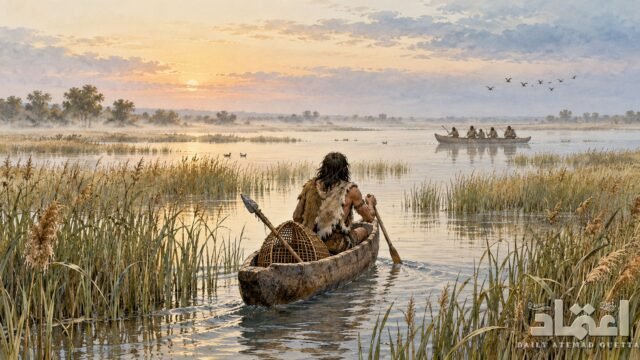 Kashti: Pani par insan ka pehla qadam
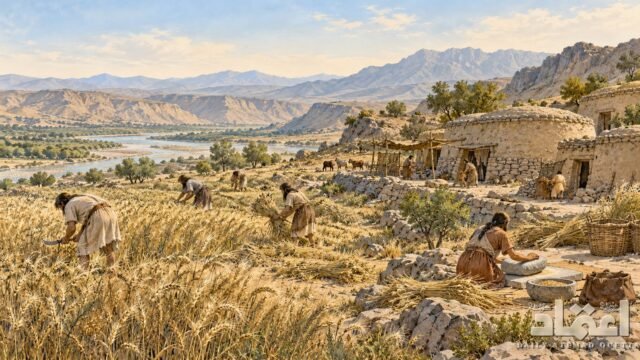 Khaiti baari: jab insan ne beej bona seekha
 Khurdbeen: Nanhi duniya ki pehli khirki
 Logarithm: Zarb ko jama mein badalne ka gur
 Loha, aasman se gire pathar se bhatti tak